
3D printing applications in the medical field
Health care for productsPersonalization, precision, complex structures and R & D efficiencyThere are higher requirements. 3D printing can link medical images, 3D scanning and digital design data to physical manufacturing, providing more flexible manufacturing methods for the development of medical devices, surgical planning, anatomical models and the development of individualized medical products.
LAYWON provides medical industry clients with medical services through industrial 3D printing equipment, materials and manufacturing technologyDigital design, product development verified for complex medical component manufacturingThe solution is to promote innovative applications in the field of precision medicine and personalized medical devices.
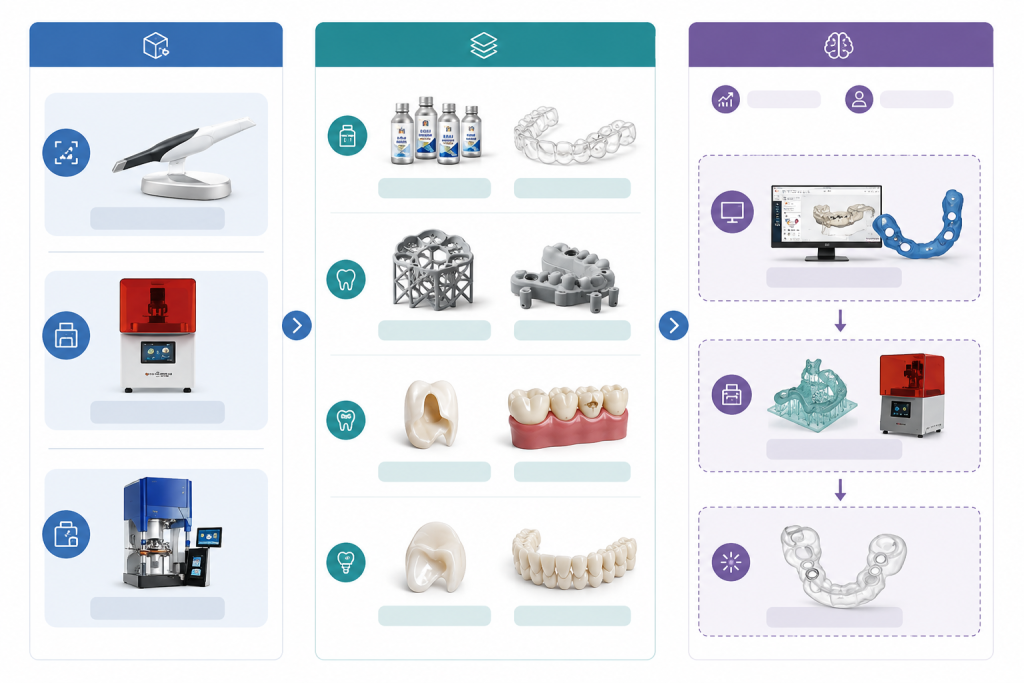
• Digital oral solutions
LAYWON for digital oral and modern dental manufacturing, professional3D dental printing and digital oral solutions。 Supported by synergetic application of oral 3D scans, digital design with 3D printing technologyDental models, planting boards, temporary crowns, dental restoration models and personalized oral instrumentsThe rapid manufacture of products, etc., translates digital data more efficiently into physical products.
For the tooth industryHigh individualization, fine product size, short delivery cycleThe digital workflows can, for example, reduce traditional modelling links, increase design and manufacturing flexibility and support individual customization and multi-generic production. LAYWON provides for more efficient and flexible dental laboratories, oral medical institutions and related R&D manufacturing enterprises through industrial 3D printing equipment, dental materials and digital manufacturing technologyDigital dental manufacturing solutions。
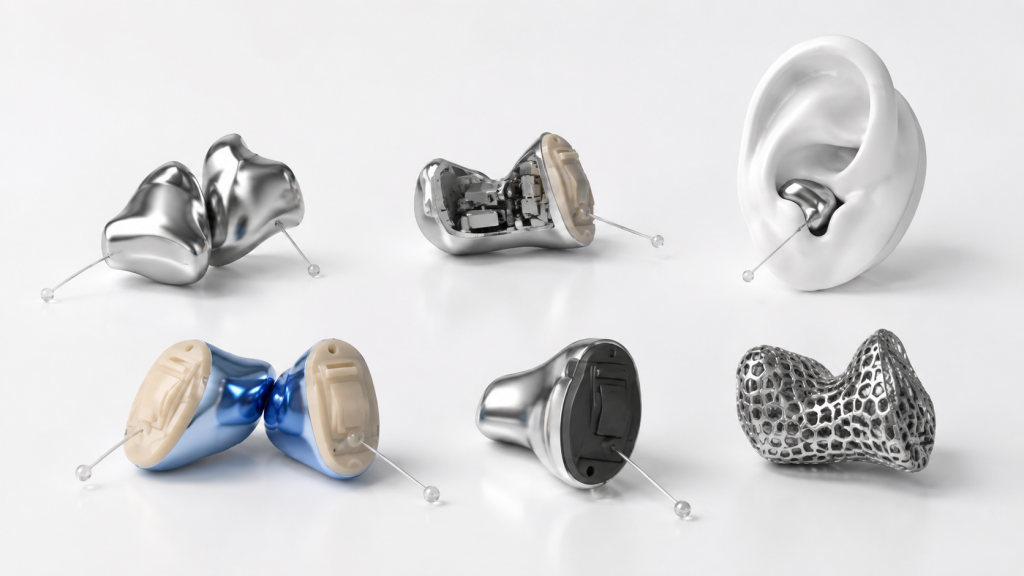
3D print titanium alloy internal hearing aid
Personalized design and metal enrichment manufacturing to give hearing aids greater structural innovation space
Intra-heart hearing aids have high requirements for size, weight, fit and internal space utilization. Personalized ear ecdotal models can be created and combined through three-dimensional ear scanning and digital designtitanium alloys 3D printing (metal enrichment) technologyThe construction of hearing aid cases with complex curves, thin walls and highly customized features. 3D printing reduces the product structure constraints of traditional moulds and makes the layout and light quantification designs more flexible in limited space.
titanium alloy and toolsHigh ratio intensity, corrosive resistance and light quantification potentialA complex structural manufacturing capability combined with 3D printing is suitable for exploring the digital manufacture of high-end customized in-heart hearing aids and related precision medical devices. For multi-specified, individualized, small-volume production demand,3D print titanium alloy internal hearing aidThe value of metal 3D printing in the field of digital and personalized medical devices is also reflected.
Medical 3D printing advantage
3D printing is driving medical products away from traditional standardized productionDigitalization, precision and personalizationDevelopment.
From three-dimensional ear scans, medical image data to CAD digital models, patient-specific data can be further converted into a three-dimensional structure that can be manufactured and then produced physically through metal or high molecular 3D printing techniques.
Here.Titanium alloy internal hearing aids, personal implants, operating boards and anatomy modelsFor representational applications, more possibilities are being demonstrated for the production of materials in the development of complex medical products.
Digital Design Driver Personalized medical manufacture
Personalized implants
Individualized design using patient-specific data can be used for the development and manufacture of relevant implants such as bone, skull and other.
Metal 3D printing is particularly suitable for complex curve, porous and imitating structures, providing greater design space for individualized structures that are difficult to achieve in traditional manufacturing methods.
Surgery boards and aids
Development of patient-specific operating boards, locator tools and assistive devices based on medical images and three-dimensional models to provide digital manufacturing support for pre-operative planning, positioning and relevant medical operation certification.
Digital design, combined with 3D printing, can respond more flexibly to individualized needs in different cases.
Focus on innovation Drive the medical future
Anatomy models and medical teaching
Rebuild three-dimensional models of human tissues, bones and organs through medical imaging data and use 3D to print physical anatomy models.
ApplyablePre-operative planning, medical teaching, patient communication and medical trainingHelps to show more visually complex human anatomy structures.
Biological materials and organizational engineering
3D printing provides new manufacturing methods for complex, porous structures, biolithopaeds and for organizing engineering-related research.
The digital design of geometrical patterns, porosity and internal structures provides additional structural innovation possibilities for biological materials, the organization of engineering frames and related medical research.
Manufacturing for precision medicine, personalization and innovation of medical devices
Oral and dental applications
Digitalized oral techniques combined with 3D printing can be applied to dental models, surgical boards, repair product development and related oral medical devices.
digitizing workflows through digital scanning, 3D design and enrichment manufacturing to improve the efficiency of dental product development and individualization.
Medical equipment and customization
3D printing can be used for the development of prototypes of medical devices, rehabilitation aids, customized devices and complex medical parts.
Especially applicable toNew product development, structural validation, functional testing and small batch custom manufactureTo reduce the time and cost inputs associated with traditional modelling of R & D.